HKS

Audio By Carbonatix
When the U.S. House version of the GOP’s sweeping tax reform package makes it to the chamber’s floor – something that could come as early as today – legislators will take up a key provision that could end up costing the city of Arlington between $100 million and $200 million. At issue are are the bonds that the city intends to sell to finance the Rangers’ new stadium.
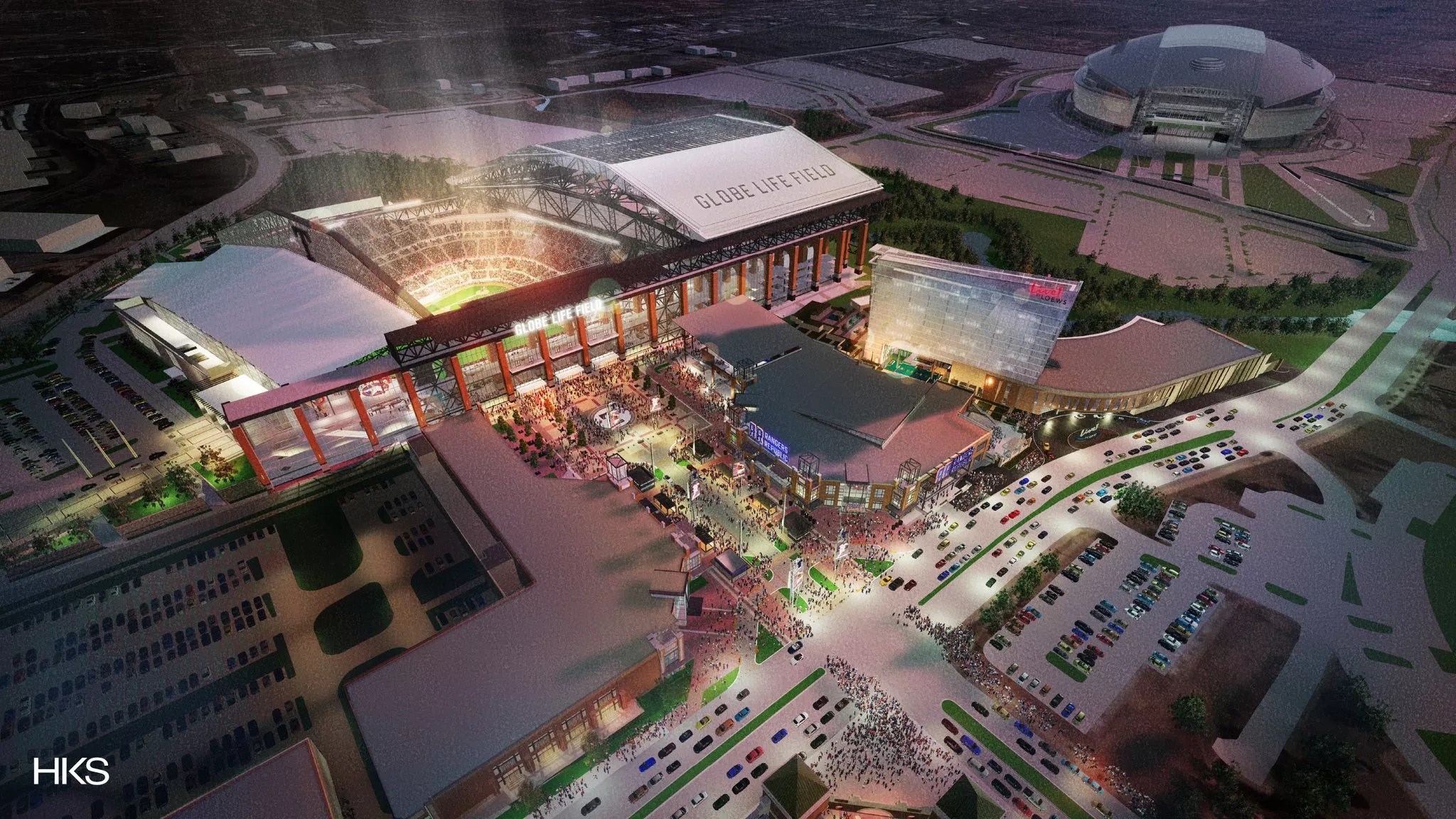
Joe Barton, the Ennis Republican whose district includes the Rangers’ current and future stadiums, has a plan to rescue the new ballpark, Globe Life Field. It’ll take some deft legislative maneuvering as the bill winds its way through Washington.
Ahead of this week’s debate on the bill, here’s what you need to know about how a small piece of it concerns North Texas’ baseball club.
What’s the deal between Arlington and the Rangers, and where does Congress fit in?
Last November, Arlington voters approved issuing $500 million in municipal bonds to help the Rangers build their new, climate-controlled stadium that’s slated to open in 2020. The bonds are set to be financed by a portion of the city’s sales tax that’s gone toward building the Rangers’ current park and to AT&T Stadium, the home of Cowboys.
While the team broke ground on the park in September, the city hasn’t yet issued and sold the bonds – it’s planning to do so next spring – which is what made Arlington uniquely vulnerable to Section 3604 of the House GOP tax plan.
Section 3604 would kill an exemption that makes municipal bonds tax-free investments in the limited instances in which they’re used to pay for stadiums. That means the city of Arlington would potentially have to guarantee higher interest rates on the bonds in order to get them sold, costing the city cash. Any bonds sold before Nov. 2 of this year are exempt from the bill’s provisions – but Arlington’s haven’t been sold yet.
What’s Joe Barton’s big plan?
Barton, a longtime Rangers fan who often sports the team’s colors at the annual congressional baseball game, wants to create a carve-out for the Arlington project in the final version of the bill. Barton’s plan would allow bonds for projects already approved by voters and already under construction – a list that would only include the Rangers stadium – to be sold tax free, as they would’ve been had the bill not passed.
“It’s basic fairness,” Barton said late Tuesday during a meeting of the House Rules Committee. “Since the voters approved this bond package, it makes sense to grandfather this project.”
On Wednesday, Arlington city spokesman Jay Warren echoed Barton.
“The City of Arlington has been following this issue and we’re pleased to see that a change to the House tax plan is under consideration,” Warren said in a statement. “Changing the tax policy in the middle of the process is not good public policy, particularly when the stadium is already being built and the change would add significant cost to the project.”
The Rangers referred questions about Barton’s plan to the city of Arlington on Wednesday.
What are the potential financial impacts of the bill and Barton’s plan?
Barton said Tuesday that taxing the bonds could end up costing the city of Arlington between $100 million and $200 million, a figure the city declined to confirm Wednesday. Allowing the Arlington bonds to be grandfathered in under the law will cost the federal treasury about $84 million, Barton said.
“So there is a cost,” he said at the Rules Committee Meeting. “But in a package that’s going to cost in the neighborhood of $1.5 [trillion] to $2 trillion, I don’t think that’s excessive.”
How likely is it that Barton will execute his plan and save Arlington’s bacon?
As of Wednesday night, it wasn’t clear whether Barton’s amendment would be included in the final version of the bill debated by the House. Even if it isn’t, Barton’s plan could eventually be included in the version that emerges from the conference committee that will reconcile the House and Senate versions of the bill if both chambers approve the plan.