Paramount/Getty Images

Audio By Carbonatix
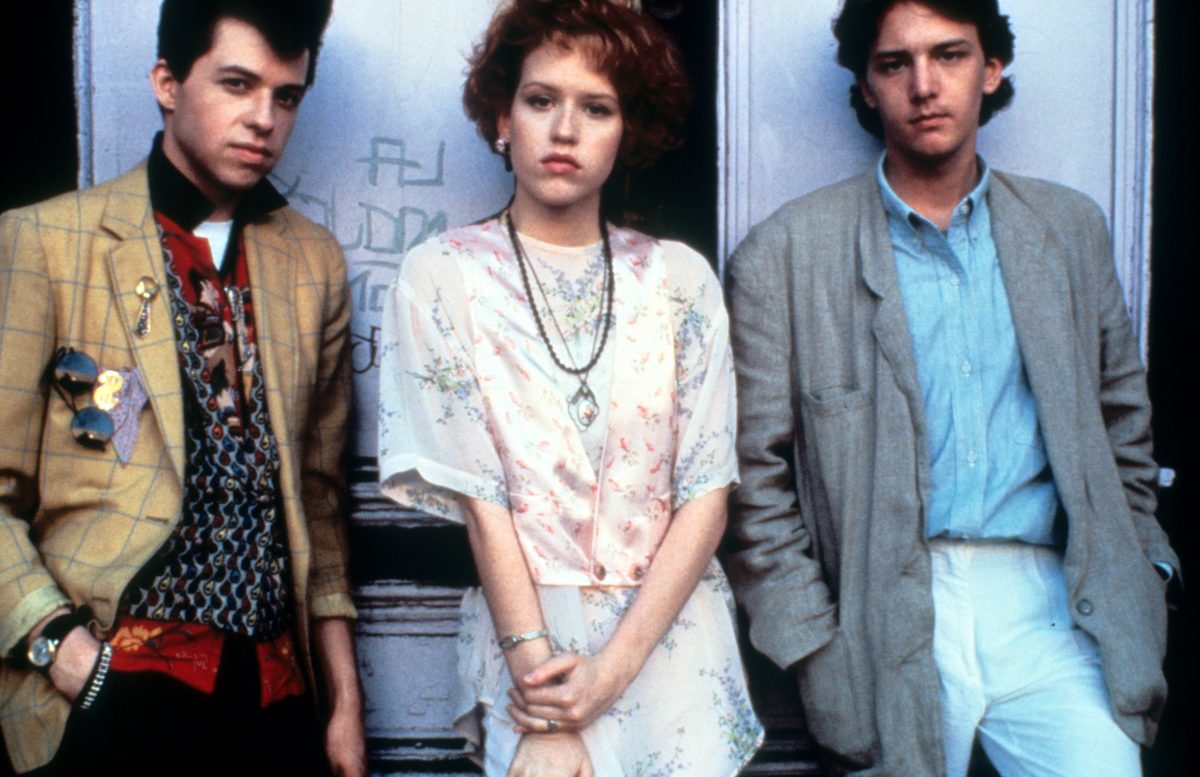
Love’s a bitch, as filmmaker John Hughes showed us in the teen classic Pretty in Pink, released Feb. 14, 1986. And 40 years after the quintessential ’80s Brat Pack release, this cult classic is still revered for its touching portrayal of adolescent heartbreak, a kickass soundtrack, a bright female lead, and, of course, for introducing us all to Philip “Duckie” Dale’s idiosyncratic stylings.
We’re indulging in a bit of nostalgia and revisiting what makes Pretty in Pink worth watching on the big screen again to celebrate its anniversary.
Nobody took suburban teenage life as seriously as Hughes, who wrote the screenplay for the film after its lead star and Brat Pack alum Molly Ringwald shared with him the song “Pretty In Pink” by the Psychedelic Furs. It’s said that Hughes misinterpreted the song’s meaning, which refers to a girl who sleeps around and her being nude as “pretty in pink.” The film couldn’t be further from this sentiment, though the song was chosen for the soundtrack and somehow feels right. The plot of the film is as old as celluloid film — poor girl meets rich boy and all the drama that comes with it. But what makes the film stand out are the characters themselves.
Andie Walsh has timeless appeal. With her perfectly messy pink bedroom, to-die-for light pink 1959 Volkswagen Karmann Ghia, and, as her best friend Duckie (played by Jon Cryer) agrees, volcanic clothing ensembles. She’s an alternative to the concept of a traditional “It Girl.”
She’s original, wears glasses and turns down grade-A asshole Steff, the most popular boy in school. She dodges the idea of what a lead female character in a teen romance should be. And we love her for it. Her best gal pal, Iona, played by Annie Potts, is another example of the film’s incredible wardrobe: a 30-something record shop owner who wears leather and chains in one scene and a beehive hairstyle and ’60s style prom dress in another.
Duckie’s fits are just as original and quirky, and are even said to have inspired Paul Rudd’s own high school attire. Complete with a pork pie hat, John Lennon-style round glasses, Fluevog white-pointed dress shoes, military pins and patches, patterned blazers, paisley shirts and a ’50s-inspired “duck tail” hairstyle, Duckie’s style can be summed up as “wear all your favorite things at once.” Duckie, who lives to adore Andie, also has a heart of gold, yet never wins her over.
Hughes originally wrote a love story ending for Duckie and Andie, but ultimately the script was changed so that Andie ends up with Blane, the rich boy with “strong lips” she falls for early on. Blane’s kind of hard to hate, though. He’s kind, cute and his deep pockets don’t hurt the dreaminess. But the unspoken moments between Andie and Duckie weigh heavily, as everyone knows he’s in love with her, but nothing happens. It’s as film critic Roger Ebert wrote in his review 40 years ago: “the central dilemma of adolescence … is that one’s dreams are so much larger than one’s confidence.”
Moments in the film were incredibly exaggerated for the sake of the story. With cigarettes in gym class, dark nightclubs with live music and alcohol-fueled parties at mansions, Pretty in Pink, among plenty of other teen-centric movies, certainly misrepresents the goings on of at least most real-life 17-year-old children. The film’s poster reads: “The laughter. The lovers. The friends. The fights. The talks. The hurt. The jealousy. The passion. The pleasure. The real world.” Although it can feel like it in the moment, real high school life never comes close to the excitement seen in these movies. But the teenage angst certainly does.
Hughes explored the spectrum of teenage angst in the films he wrote or directed. In 1985’s The Breakfast Club, we see the cliches of high school cliques and the misunderstandings that come with them. Ferris Bueller’s Day Off is a love letter to middle-class misbehavior in the pursuit of finding oneself. Pretty in Pink saw complex characters handle the weighty issues of love, family and class inequity. It shows us the ups and downs of romance between a lower-middle-class girl and an upper-class boy, as well as the jealousy and lovelorn feelings of a friend. The film leans into some tired tropes of high school life, sure, but it shows a refreshing female lead who is smart, confident, creative and has no desire to sell herself out to win the guy.
The film isn’t just remembered for its story, either. It’s also considered to have one of the most kickass soundtracks in cinema, which includes Psychedelic Furs, The Smiths, New Order, Orchestral Maneuvers in the Dark and Echo and the Bunnymen. And let’s not forget Cryer’s unforgettable lip-synching performance to Otis Redding’s “Try a Little Tenderness,” which resulted in some injuries and the demise of some vintage shoes he wore. Meanwhile, the record store Andie works in, Trax, is an audiophile’s wet dream with larger-than-life posters and seemingly endless aisles of vinyl.
In the early era of teen movies, from the 1950s to the ’80s, plots centered on archetypes such as rebellion, greasers, jocks and nerds, often with lighter themes. The 1990s and early aughts saw a rise in comedies like Clueless and Mean Girls; supernatural stories like Twilight and the Harry Potter series; queer narratives in films like Love, Simon; and mental health struggles like those in The Edge of Seventeen. Today, teen-focused content includes increased realism with topics like suicide, addiction, sexual identity and the pressures of social media. And it’s not just white suburbia that’s represented. The idea of what teen movies are has dramatically changed since their “golden age” in the 1980s.
But high hormones, low confidence, love triangles, the woes of popularity and class divide mean love’s a bitch in just about any teen drama. Pretty in Pink certainly glamorizes this era of life that feels so heavy when we’re in it, but so inconsequential as an adult. And even though we can predict these same old plot lines one after another, it’s proof, perhaps, that some stories won’t die.
Check out a 40th anniversary screening of Pretty in Pink at select Cinemark, Movie Tavern, AMC and Studio Movie Grill theaters across North Texas.