Nathan Hunsinger

Audio By Carbonatix
The Dallas City Hall building is not at risk of toppling over. That is where the good news began and ended during Monday’s meeting of the City Council’s Finance Committee, in which nearly six hours were dedicated to discussing the comprehensive condition report the council commissioned for the building late last year.
The report, made public last Friday, outlines $1 billion in repairs needed for the 47-year-old building that looms over Marilla Street. It is a price tag that has ballooned so much that “ballooned” feels an inadequate word; during summer 2024 conversations, city staff guessed $80 million would be needed for deferred maintenance. In October 2025, a memo raised that estimate to $345 million.
Now, the forecast is 10 figures. Not everyone is sold.
“Many of us up here at the horseshoe are skeptical of the $1 billion price tag included in the presentation,” said Council member Chad West, the chair of the Finance Committee, at the start of Monday’s briefing.
Still, the report painted a dire picture, and by the end of the meeting, the Finance Committee approved a slew of recommendations that will now be weighed by the full council, and which seem to point towards change. Among the recommendations are a directive for the 311 and 911 call centers to be moved out of City Hall and into an alternative government facility as soon as possible, a directive for the city manager’s office to pursue redevelopment and relocation options, a look at funding sources and initiate a community feedback survey and a request for an additional briefing by May of this year.
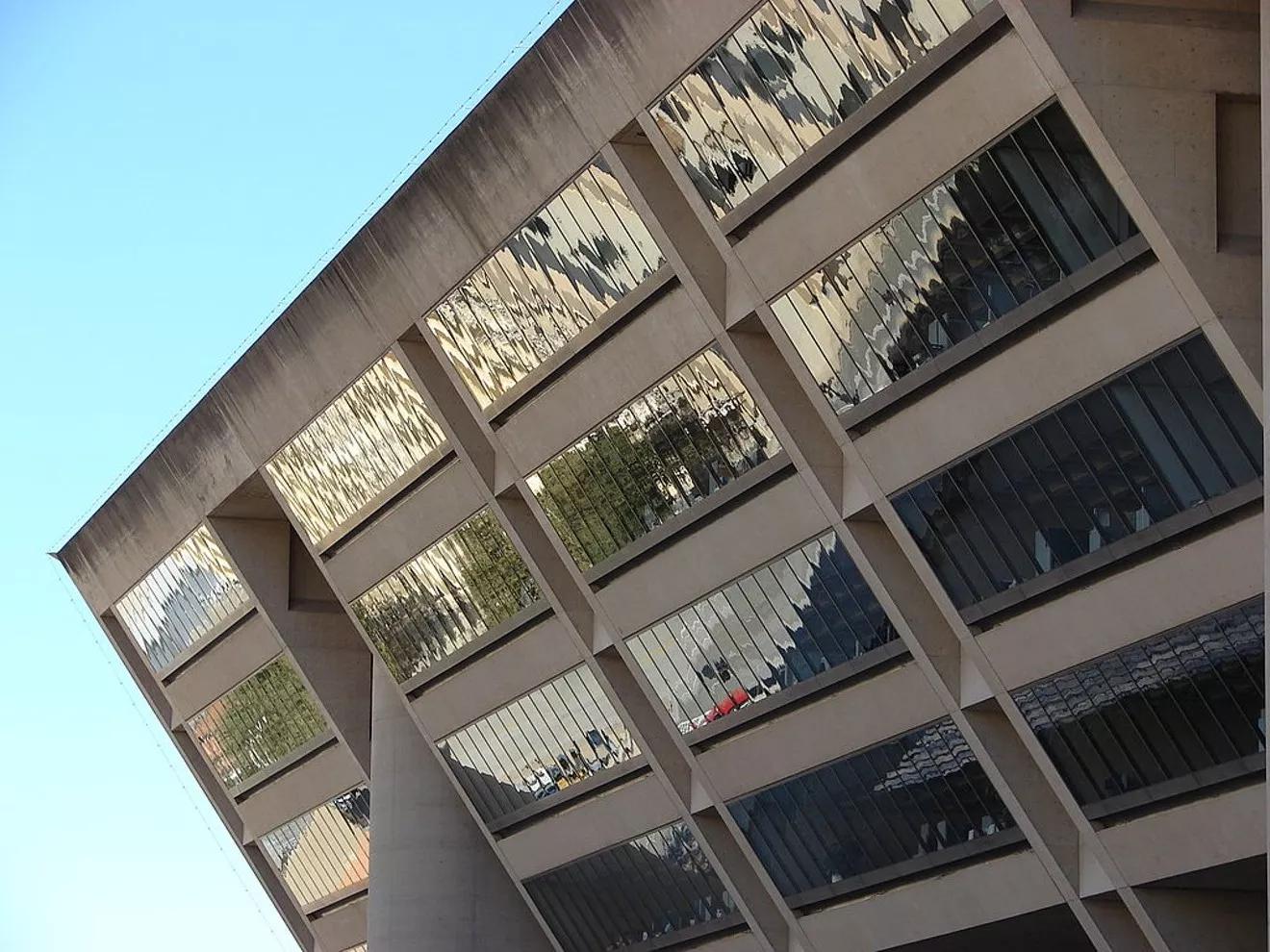
The very nature of City Hall, a brutalist building, means it presents an abnormal construction scenario, said Assistant City Manager Donzell Gipson.
According to a condition report developed by a team of engineers, architects and city stakeholders, City Hall is failing on virtually every front. Plumbing, HVAC, electrical and power systems are beyond their useful lives. The aluminum-framed windows, a key feature of the building designed by renowned architect I.M. Pei, are “thermally inefficient.”
The third-level basement, which designers never finished building out, is full of water; code compliance is an afterthought; major gathering spaces, like the City Council chambers, are not accessible to individuals with disabilities; and floors one through six of the building lack fire sprinklers. None of that includes the inefficiencies in how the space is used and managed across departments.
All of that is going to add up, officials told the council. While Monday’s meeting was officially a Finance Committee briefing, all 14 council members attended at least parts of the briefing, and City Manager Kimberly Tolbert made an appearance. The only member of the horseshoe who did not show was Mayor Eric Johnson, who launched the City Hall discussion by charging the group with exploring the “effectiveness” of the building’s management and the “fiscally responsible course” for City Hall’s future when he appointed the committee.
“Overall, our assessment sees that if you want to hold on to this building in the longterm, a large-scale systems replacement [is necessary],” said Steven Duong, a vice president with the infrastructure consultant firm AECOM.
The Repairs
To replace every failing system in City Hall with a working version of the same system would cost $329 million. That spending would not be enough to modernize the building, bring those systems up to code, make progress on ADA accessibility or address any change orders or surprises found along the way, such as the asbestos that Monday’s presenters are all but positive floats in City Hall’s walls in abundance.
The billion-dollar fix-up assumes all of the repairs needed at City Hall are done at once. $133 million is earmarked for temporarily relocating city departments, $165 million would be needed to make the building move-in ready and $299 million is for the 20-year financing that makes the whole thing possible. While some council members appeared interested in exploring a phased repairs approach, Duong warned that it would “lengthen timelines and increase budget.”
He pointed to complications in Boston, a city that found itself in a similar predicament, as evidence that an all-in-one dive on the building would be beneficial. The Boston City Hall was designed following a master plan by I.M. Pei, and the brutalist, 55-year-old structure (which was once voted the second-ugliest building in the U.S.) required $95 million to get whipped back into some kind of fighting shape.
For some members of the horseshoe, City Hall repairs would be an irresponsible way to spend such a large sum. Tolbert reminded the council that in the last bond priority survey, residents pointed to infrastructure, parks, homelessness and public safety as the issues they wanted to see funds directed towards. City Hall maintenance ranked third from the bottom.
“We have needs outside of this building that are great. We have libraries and a police academy that we’re building and fire stations that need to be updated. I understand the focus outside of this building to all of those spaces,” said Council member Kathy Stewart. “My concern is that no matter what we do, whichever direction [we go], we are going to decide how we want to prioritize.”
The council members who appeared most skeptical of the report are not members of the committee and were not able to vote on the directive to move the issue to the full council. Council member Cara Mendelsohn, who has been an advocate for saving the building since this discussion began, said her impression of the report was that it was “one-sided, predetermined and agenda-driven.” Council member Adam Bazaldua, an advocate in 2024 for including maintenance funding in the bond, said he was not convinced by the presentation that leaving City Hall is the right move.
Despite their hesitations, Tuesday’s presenters told the council that they do not believe that an audit of the report is necessary to verify its findings, and that the billion-dollar estimation is likely accurate.
“While I respect that people have an opinion, it is not relevant to this because I have confidence in the numbers that we’ve presented,” said Linda McMahon, CEO of the Dallas Economic Development Corporation, which helped lead the conditions report. “This is not about sentiment, it’s about stewardship of taxpayer money.”