Emma Ruby

Audio By Carbonatix
When the 70-year-old videos of Tommy Lee Walker played on the large screens of the Dallas County Commissioners Court on Wednesday morning, it was difficult to think of much besides how young and scared he appears.
Walker, the Black teenager who Dallas wrongly sentenced to die in 1954, is shown being weighed, fingerprinted and led around the Dallas police station. In the following clip, white investigators wearing short ties and fedoras weigh palm-sized knives in their hands, as if choosing which weapon best suits the crime they are accusing Walker of committing.
In the final video, a Dallas County judge asks Walker if he has any final words for the court that is moments away from convicting him for the murder of a white woman whom he’d never met. The 19-year-old Walker frowns slightly, baby fat still clinging to his cheeks. A long-faced lawyer encourages him to speak.
“I feel that I have been tricked out of my life,” Walker responds, his voice soft.
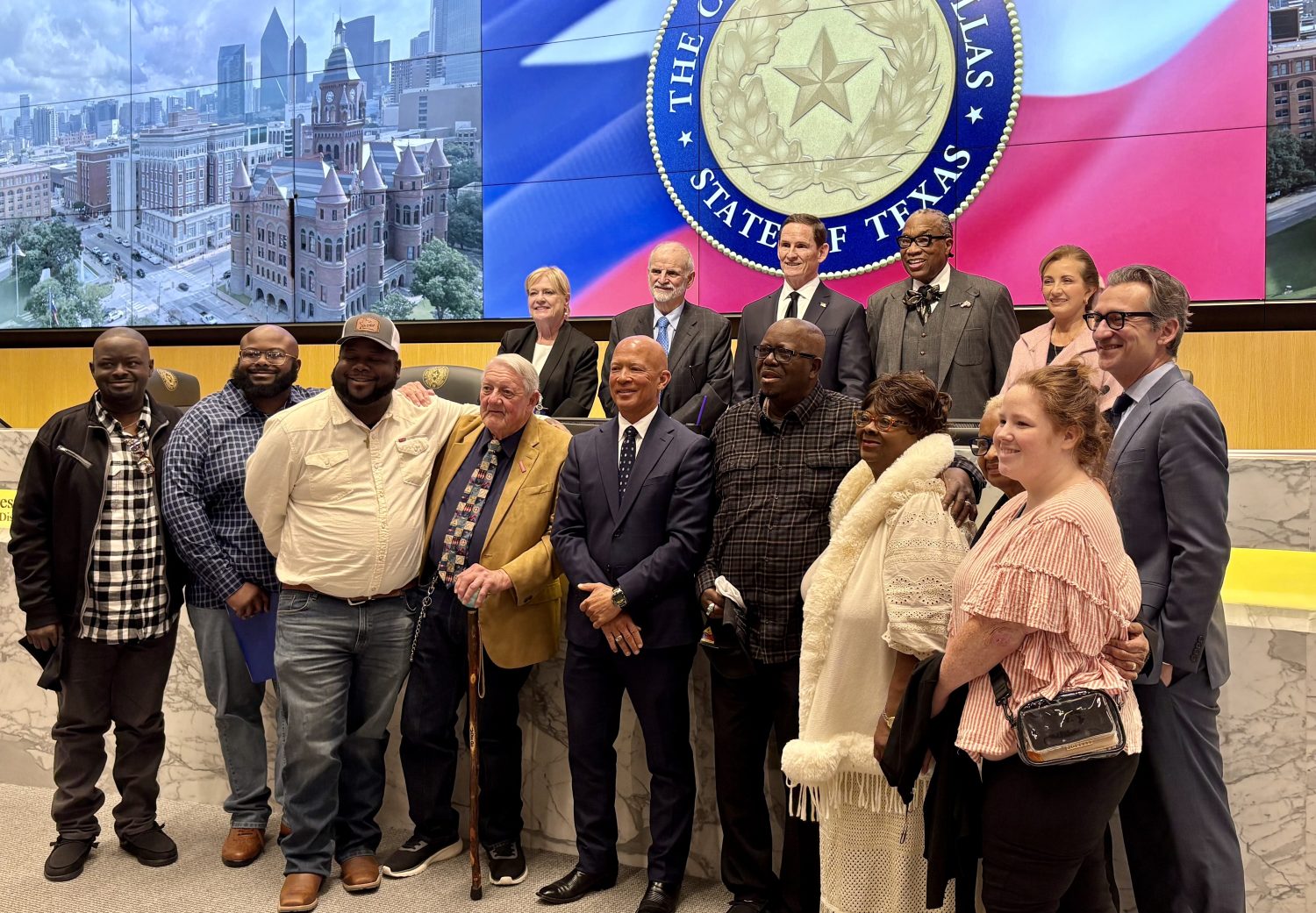
Wednesday’s commissioners meeting culminated in the unanimous exoneration of Walker, whose case was first reexamined after journalist Mary Mapes began investigating the circumstances of his prosecution in 2013. The resolution is “unprecedented,” being the first posthumous proclamation of innocence to be made by a commissioners court in Texas, said attorneys with the death row advocacy group The Innocence Project.
An investigation by Mapes, The Innocence Project, law professor Margaret Burnham and the Dallas County District Attorney’s office found that Walker’s prosecution was riddled with racial prejudice. In late 1953, Dallas’ white community “was in a state of frenzy” over reports of a “Negro prowler,” said Burnham. When a white woman, Venice Parker, was raped and killed in September of that year, the Dallas Police Department launched “roundups and dragnet searches” to find a guilty Black man.
Instead, in January of 1954, they found Walker.
“Tommy Lee Walker’s constitutional rights were violated at every turn,” said Dallas County District Attorney John Creuzot. “[The investigation was] riddled with racial injustice during a time when prejudice and bigotry were woven in every aspect of society.”
While in DPD custody, Walker witnessed police assaults on other Black inmates and was told by investigators that evidence had indicted him for the crime, despite the fact that no forensic evidence existed. It also did not matter to investigators that Walker was present at the birth of his first child at the time of Parker’s murder.
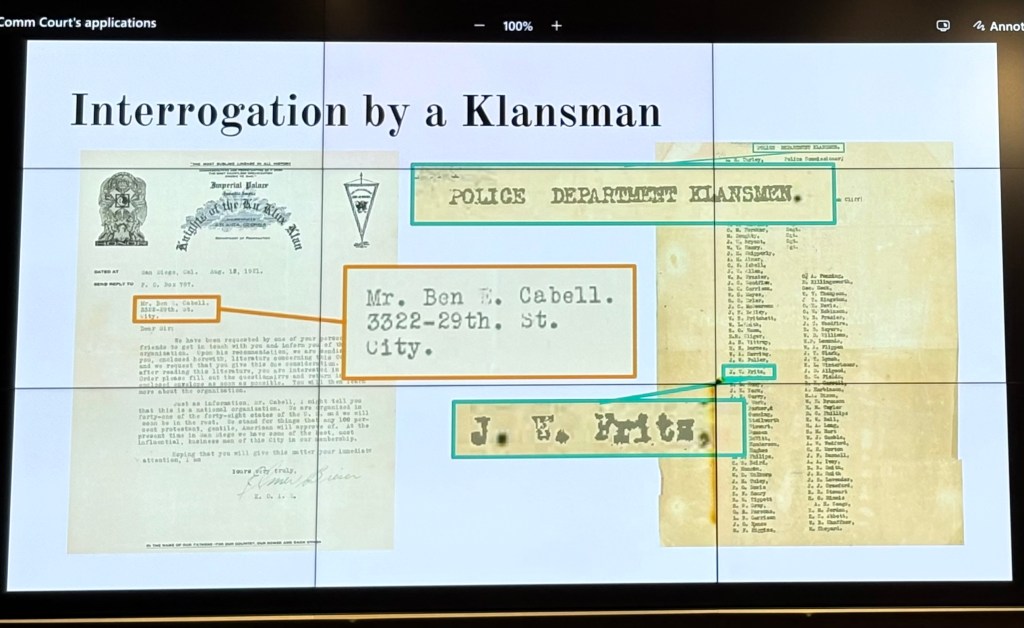
Wednesday’s presentation also included evidence that Will Fritz, the DPD homicide captain who led the investigation into Walker, was a “known Ku Klux Klan member.” According to police and media reports from the time, an officer who responded to Parker’s murder claimed that just before her death, she’d blamed a Black man for slashing her throat. Other witnesses challenged that account, but the officer’s story was still shared with Walker’s jury and the press.
Emma Ruby
Creuzot and Burnham claimed that after being arrested, Walker was coerced into giving false confessions. At times, those confessions contradicted each other. Walker later recanted the confessions, stating that he was afraid for his life at the time they were made. According to Burnham, threats of the death penalty were used to force Walker into compliance.
“If you tell someone that they’re going to go to the chair, they’re going to do whatever they can do to avoid that fate. Both Fritz and [former District Attorney Henry] Wade made clear to Walker that the chair was there,” Burnham said. “They didn’t have to tell him that; he knew that. But they reinforced that, they made it clear to him that the death penalty was on the table.”
Walker was sentenced to death by an all-white jury only three months after his arrest. He was killed in Huntsville by an electric chair on May 12, 1956. According to Walker’s family, he maintained his innocence until his death.
“You can imagine that Tommy Lee Walker didn’t stand a chance,” Creuzot said. “He knew it didn’t matter what he said. That the die was cast on his life.”
A Legacy of Pain
Mapes said it was not uncommon, during her years of conducting interviews about Walker’s death, for folks to break down in tears.
Walker’s prosecution was a particular point of pain for Dallas’ Black community in the ‘50s. Black Dallasites showed up by the thousands to stand outside the Dallas County courthouse during the trial, and reporting by Dallas’ Black newspaper, The Dallas Express, stated that 5,000 people attended Walker’s viewing after he was executed.
At a time when race relations between Dallas’ Black and white communities were in upheaval, the case contributed to the harm that “many still feel,” Mapes said.
Edward Smith was 2 years old when his father, Walker, was executed. He told Wednesday’s meeting that growing up fatherless was “a nightmare,” and that for much of his early childhood, he was unable to comprehend what had happened to his father. After Walker was executed, he said his mother fell into a pattern of heavy drinking, often telling Smith, “They took your daddy from me.”
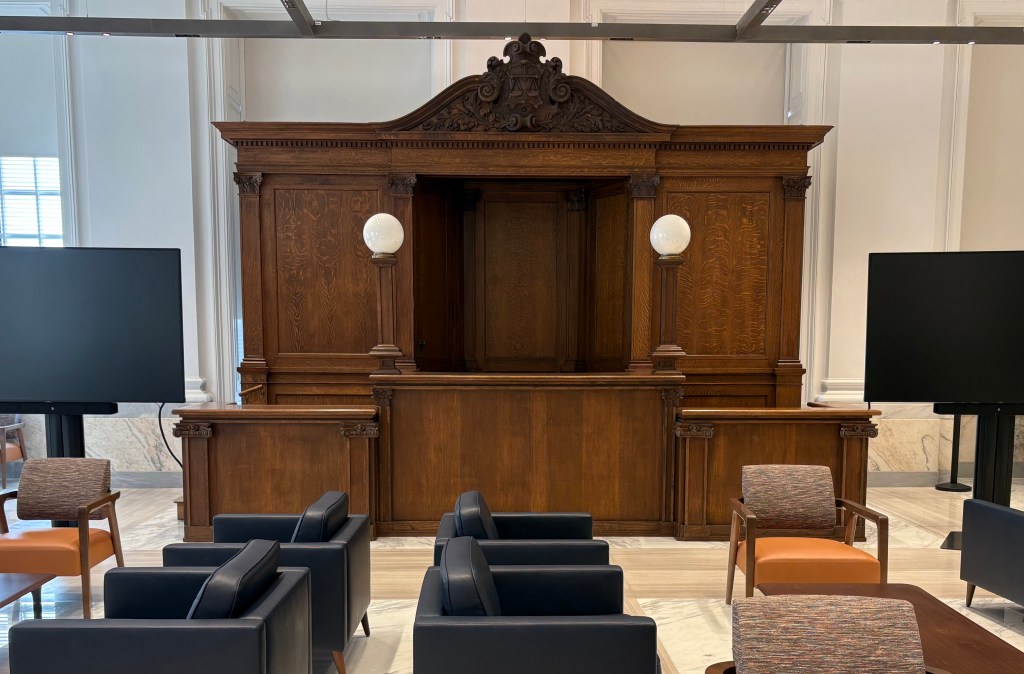
“As I grew older, I realized that he wasn’t coming back. That the electric chair,“ Edward trailed off, resting against the podium that stands before the commissioner’s horseshoe. Then, a whimper escaped his lips.
“I’m 72 years old, and I still miss my daddy,” he said while crying.
Emma Ruby
When Mapes began asking questions about Walker’s case, Smith said, his family was finally able to find some peace of mind after decades of mourning.
Also present on Wednesday was Joseph Parker, the son of Venice Parker. Before speaking, he embraced Smith, and the two men stood arm-in-arm. Parker, who now lives in Houston, urged the court to acknowledge Walker’s innocence.
“I don’t think [Walker] would have been capable of doing what he was accused of doing. It just doesn’t make sense,” Parker said. “We seem to have a knack for taking the biggest cases and screwing them up royally… I just hope that this court does not add to that mistake.”
Smith cried out, thanking God, when Dallas County Judge Clay Jenkins announced the court’s unanimous finding of Walker’s innocence. The resolution, read to the courtroom by Commissioner John Wiley Price, declared the prosecution of Walker unjust and affirmed the court’s belief that he did not kill Parker.
Emotionally, the commissioners acknowledged that, in the prosecution of Walker, two families had been denied justice. Parker’s true killer has not been identified.
“We must do what we can when given the opportunity to look at old, or as they call them, dead cases,” Jenkins said. “The files may be dead in a legal sense, but the pain of the injustice remains.”